Dispatch Review
Published: 15/11/2025
Article
GAMING NEWS
AdHoc Studio returns to the forefront of story-driven games with Dispatch, a cinematic adventure that blends heartfelt character growth with quick-thinking decision-making.
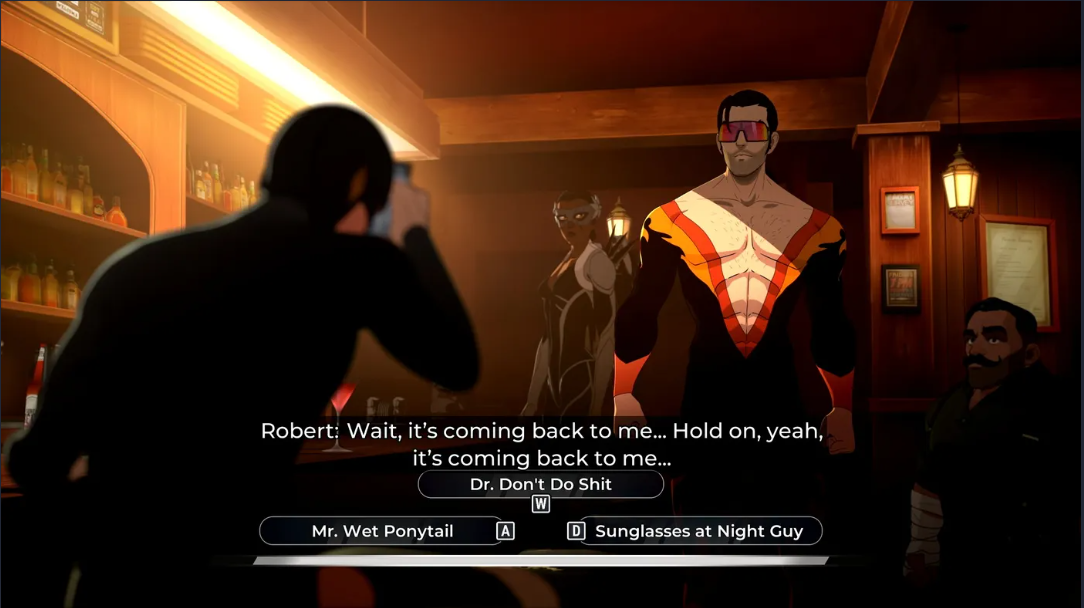 Set in a surreal, superpowered version of Los Angeles, the game explores the complicated lives of heroes, villains, and everyone stuck between their battles.
Across its eight episodes, Dispatch follows Robert Robertson — better known as Mecha Man — whose superhero career ends abruptly after an explosion destroys his mech suit. Stripped of his former glory, he’s reassigned to a low-level call center at the SDC, a corporate watchdog agency that manages superpowered disputes.
Robert’s new responsibility is wrangling a group of barely-redeemed misfits known as the Z-Team, whose sarcasm and volatile tempers challenge his patience. Over the game’s roughly eight-hour journey, the witty writing and grounded performances make his fall-from-grace transformation feel surprisingly relatable.
Most of Dispatch plays like a modern interactive drama, offering expressive dialogue choices, gorgeously animated cutscenes, and tense quick-time events reminiscent of The Wolf Among Us or Life is Strange. Some choices lead to clever jokes or new character animations, while others trigger those nostalgic “Someone will remember that” prompts that shape your version of Robert. Even if not every decision dramatically changes the plot, the endings remain true to the path you carve.
Between conversations, players tackle Dispatch’s standout minigame: managing citywide emergencies by assigning heroes to timed missions. Each character has Pokémon-style stats and distinct personalities, so matching the right hero to the right crisis becomes a frantic balancing act. Successful calls earn XP and stat upgrades, while failures can injure your supers or remove them from the shift entirely.
As the Z-Team grows, they unlock unique abilities — Prism duplicates herself to extend mission timers, while Invisigal boosts her speed when solo — creating a satisfying loop that mixes strategy with narrative consequences.
Morale also matters. During one chaotic shift, internal team rivalry causes heroes to ignore your commands altogether. Frustrating? Absolutely. But it also mirrors Robert’s emotional strain, tying gameplay friction directly to character development in a clever, immersive way.
Another recurring task is a 3D hacking puzzle where Robert navigates digital mazes under strict time limits, dodging antivirus hazards and manipulating power nodes. These sections escalate in difficulty and, while functional, stand out as less enjoyable compared to the rest of the experience.
Still, Dispatch’s charm lies in how it humanizes its flawed cast. Moments like watching the massive, stone-bodied Golem sulking outside a villain bar — earbuds in, just wanting to belong — make even the roughest characters unexpectedly sympathetic.
Every emotional beat is elevated by an exceptional voice cast. Laura Bailey’s Invisigal flips between snark and sincerity with ease, Erin Yvette’s Blonde Blazer blends heroic confidence with quirky humor, and Aaron Paul brings depth to Robert’s quiet struggle to redefine himself beyond his mech suit.
By the end, Dispatch emerges as a modern spiritual successor to the choice-based adventures of the 2010s. It nails the balance between television-style drama and hands-on gameplay, offering memorable characters, sharp storytelling, and a dispatch system that cleverly ties its themes together. Aside from some clunky hacking puzzles, it’s a gripping emotional ride with one lingering question: when’s Season 2?
By Sarah Thwaites
3 min read · Nov 14, 2025